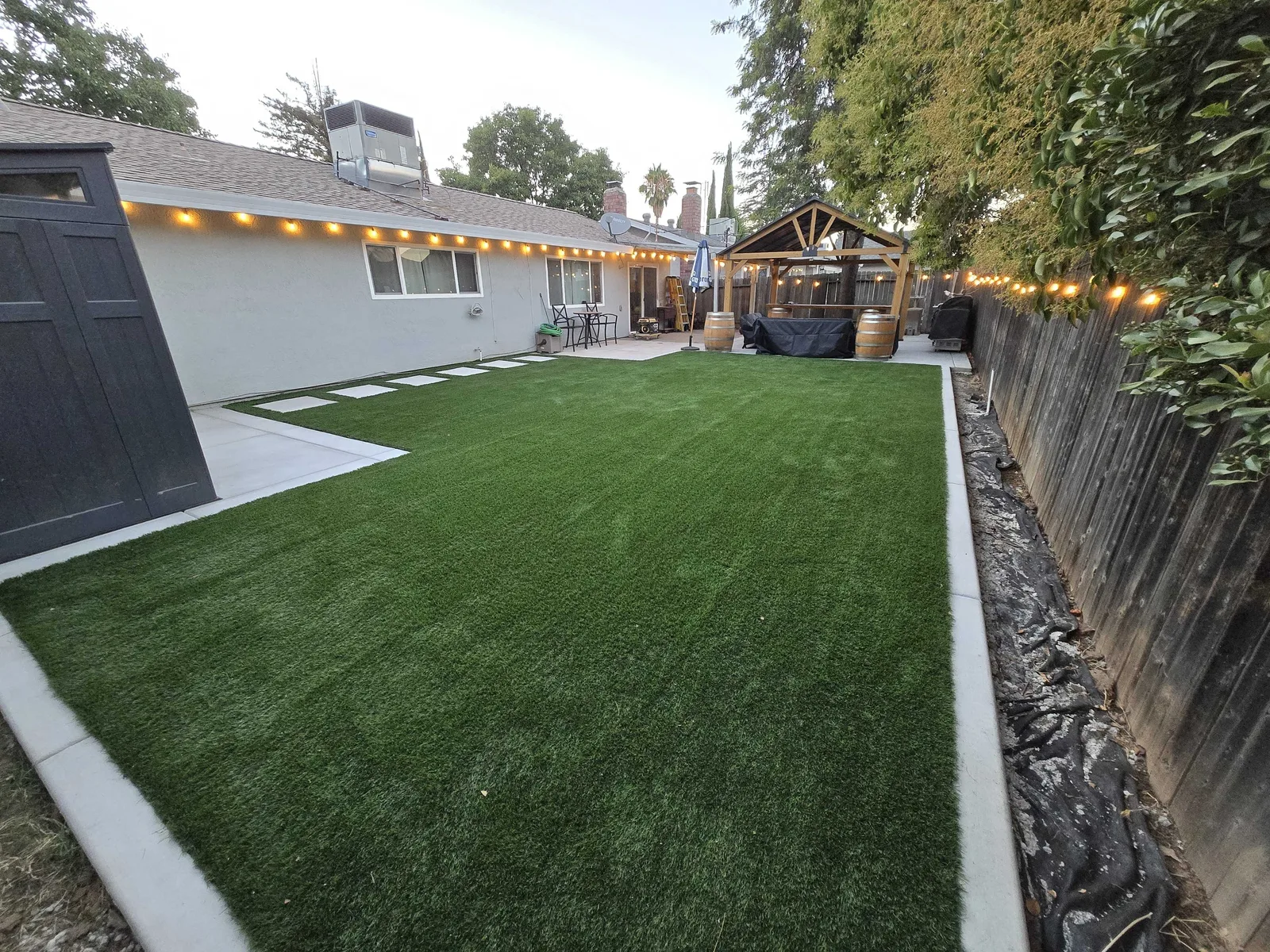
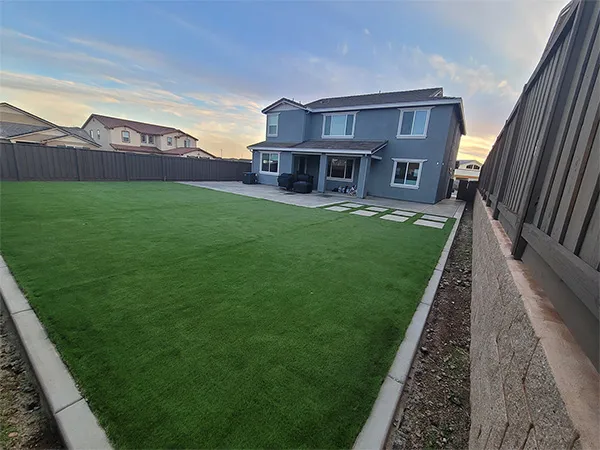
Installed Like a Slab, Not Like Carpet
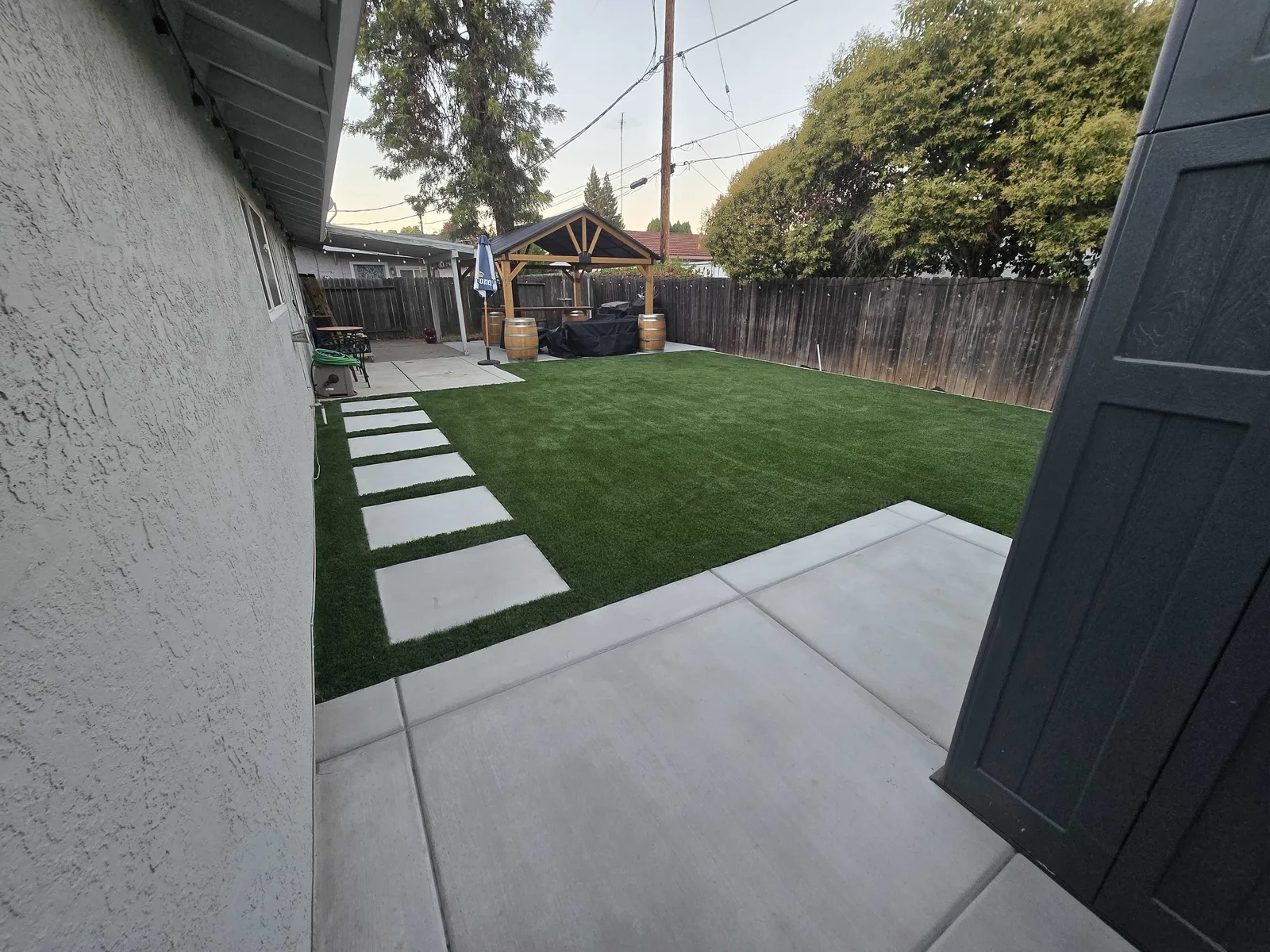
Turf fails when it is treated as a surface instead of a system. Ours goes on excavated, compacted base rock graded to drain, with seams laid out to disappear and edges secured against curl. Infill is matched to use — lawns, pets, play areas and putting greens each get their own spec. That is the difference between turf that still looks installed-yesterday in year eight and turf that ripples in year two.
It also drains. A properly based turf lawn sheds winter rain into the ground or the drainage plan instead of ponding — something we engineer deliberately on the flat lots of Roseville and Lincoln's newer neighborhoods. For Rocklin's slower-draining ground and its HOA neighborhoods, see our page on artificial turf installation in Rocklin. For new-build yards south of Highway 50 and older lawns north of it, see artificial turf installation in Folsom.
What a Valley Summer Does to the Argument
Natural grass in this climate is a treadmill: water bills climbing all summer to keep it merely alive, mowing every week, brown patches anyway by August. Turf ends the treadmill. It is green in July without a drop, and the time and water you were spending go back in your pocket.
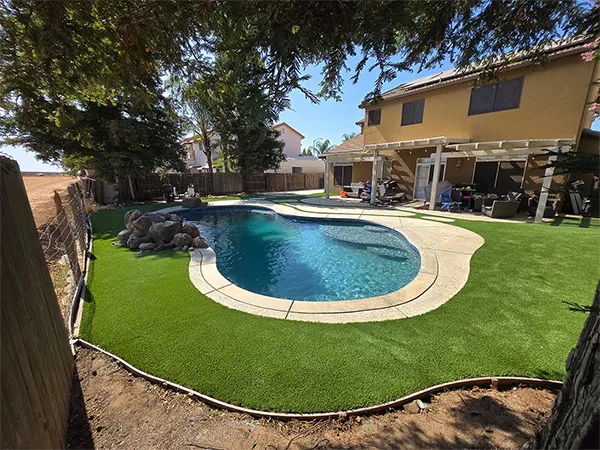
Families use it hardest: play space that does not wear to dirt, pool surrounds that do not track mud, dog runs that rinse clean. Our reviews are full of exactly these yards.
Putting Greens and Feature Lawns
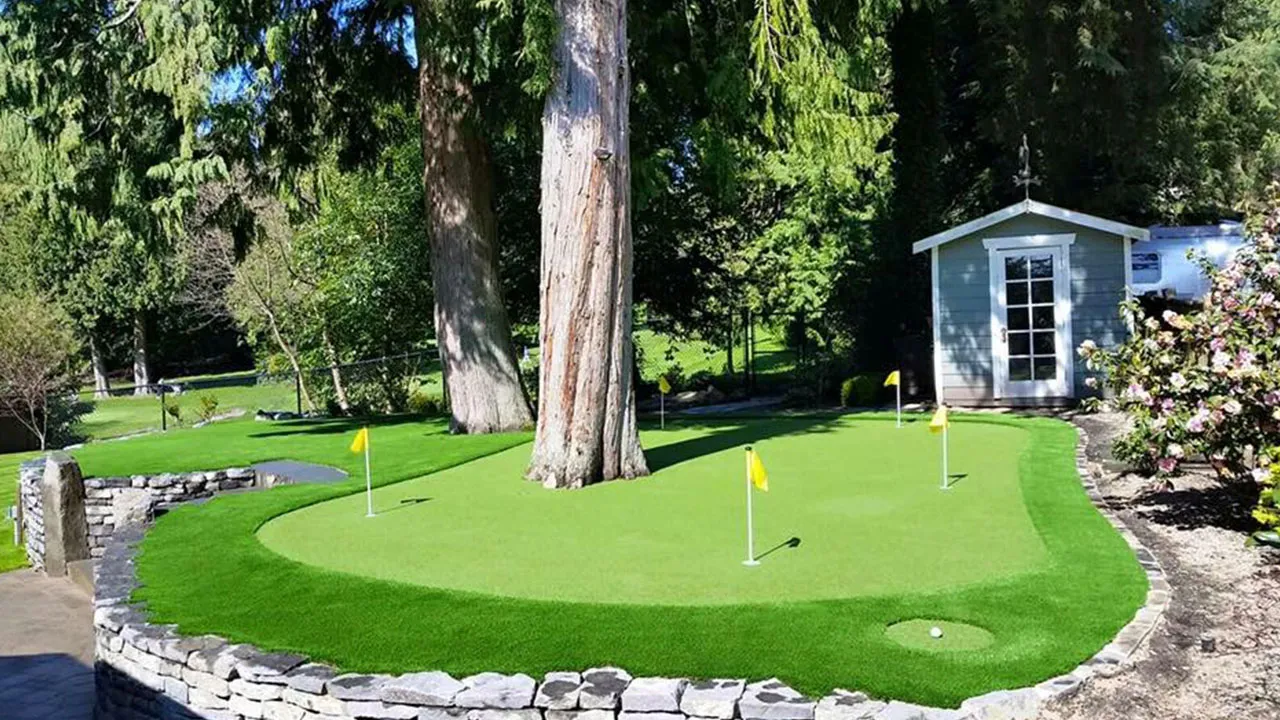
A backyard putting green is turf craftsmanship on display — dedicated green speeds, cut cups, fringe transitions and contours built into the base. We have tucked greens beside pools and into corner spaces that were doing nothing, and they instantly become the most-used square footage in the yard. One client had us replace an aging putting green outright — it is a build we know well.
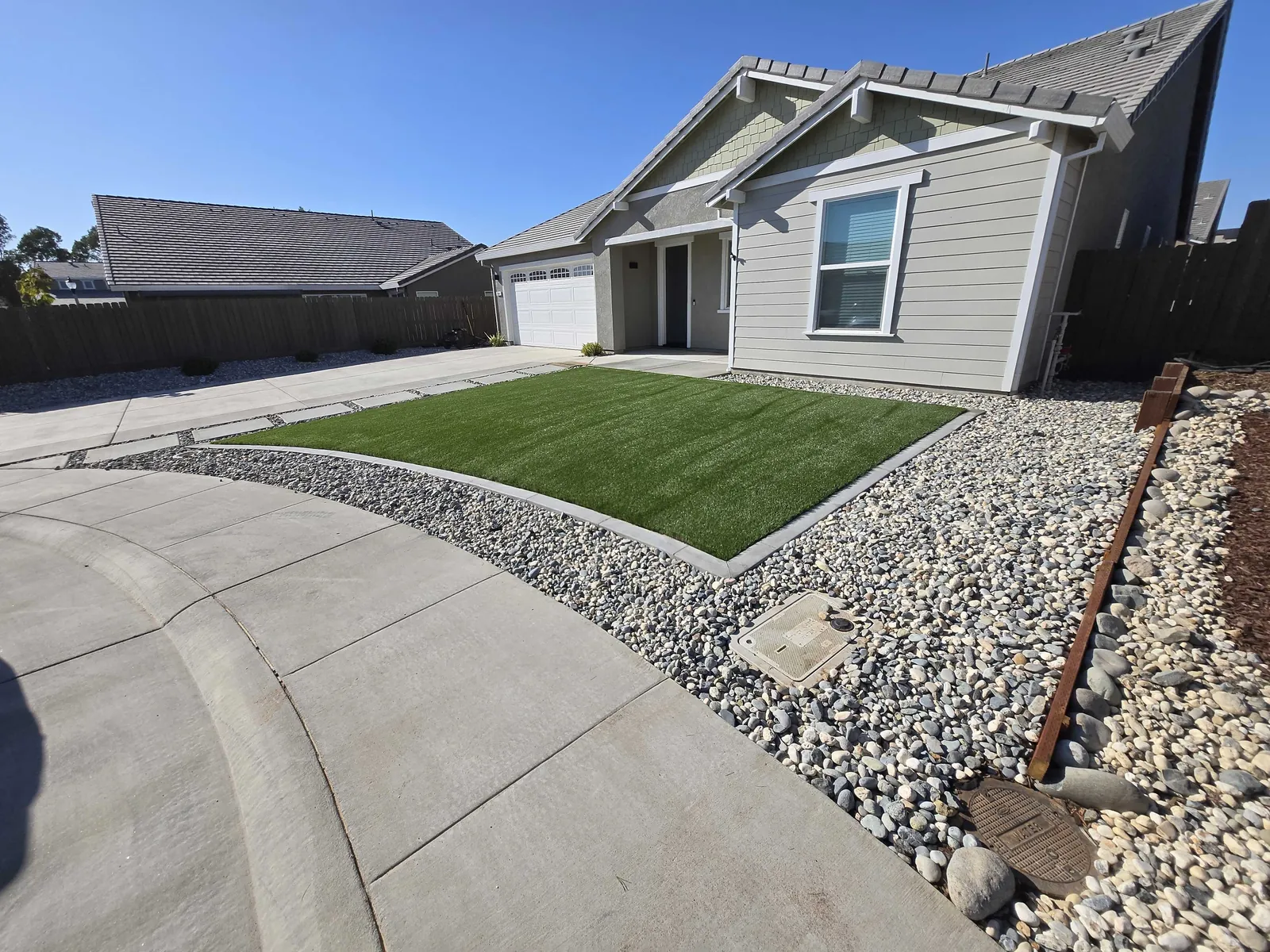
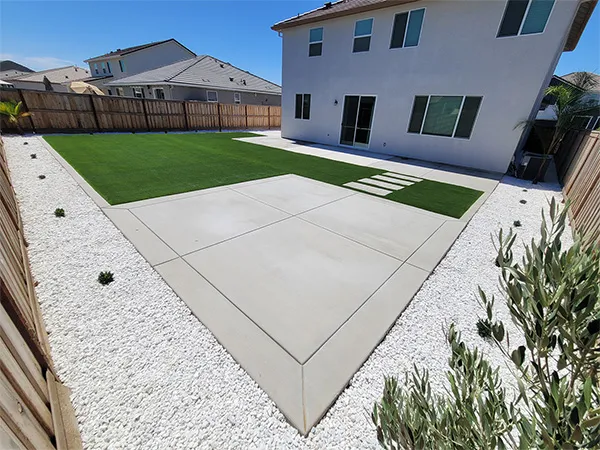
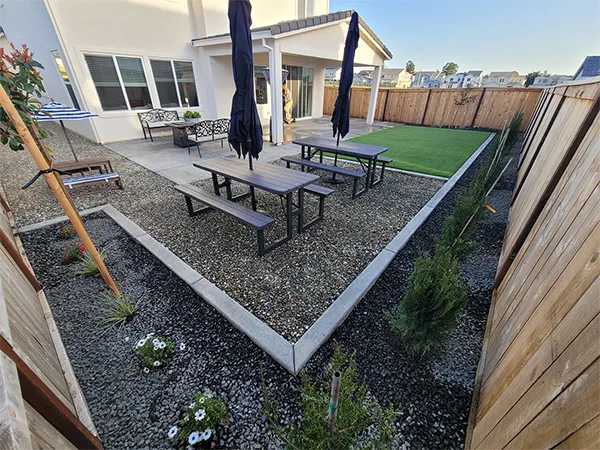
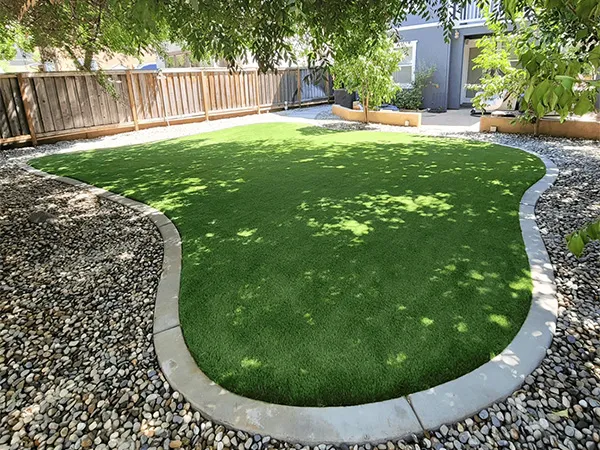
Feature lawns work the same way: a shaped green inset in rock or concrete reads as designed landscape, not lawn substitute.

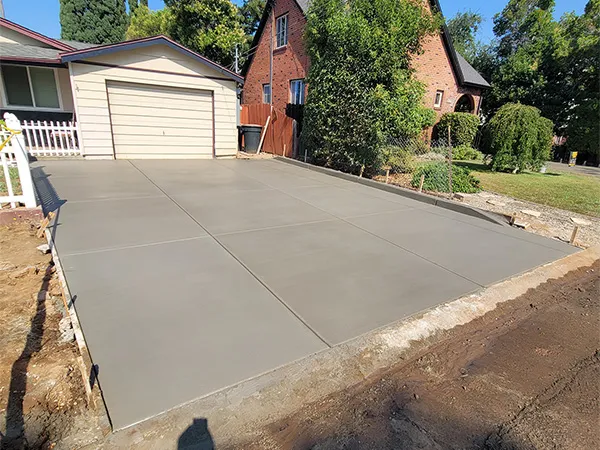
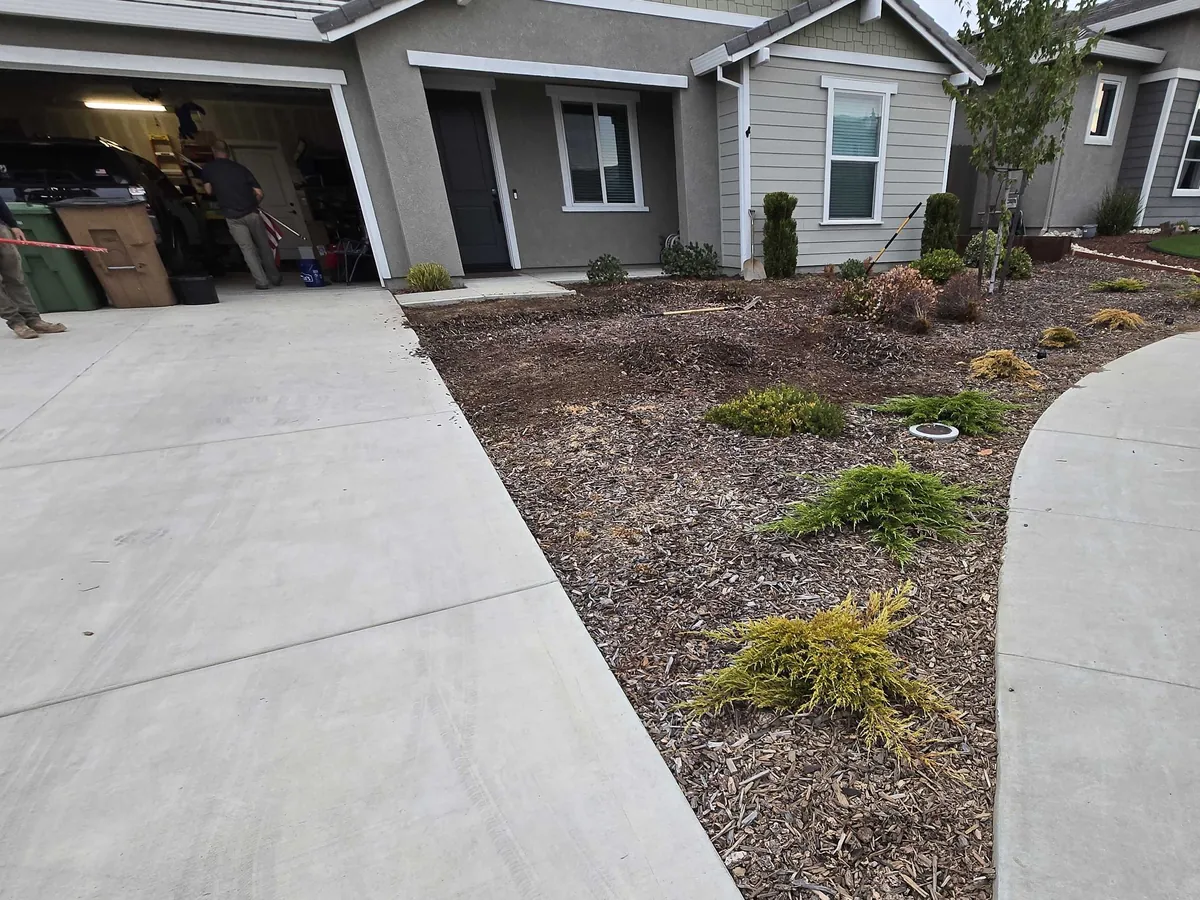 Before
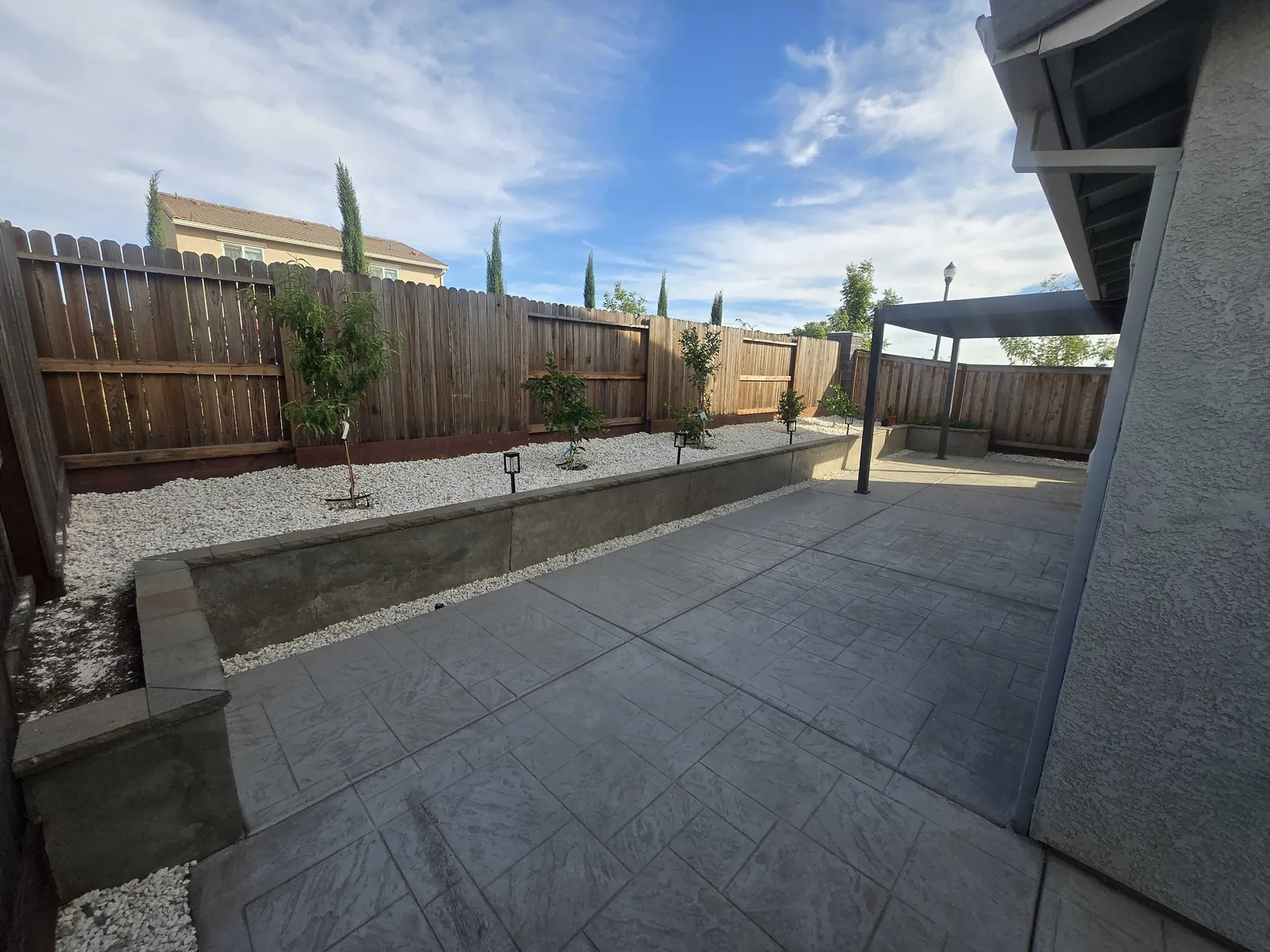
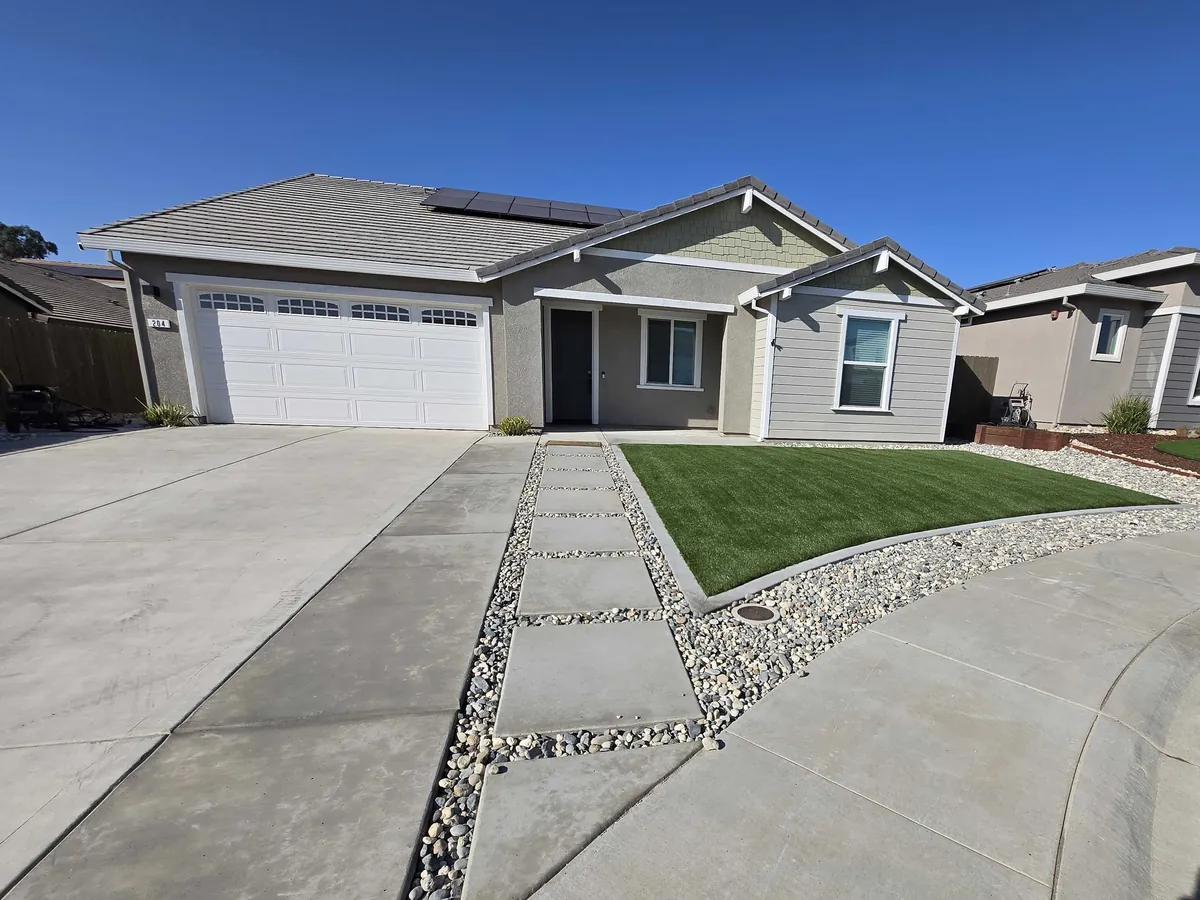 After