Concrete Driveway Extension Cost in Roseville: Widening, Permits and Prices (2026)
Plan on $6 to $15 per square foot for a concrete driveway extension. That is HomeGuide’s 2026 range for standard 4 inch concrete. A 10 x 20 ft side extension, room for one more car, comes to about $1,200 to $3,000. Tear-out and curb work add to that.
RMR Construction builds concrete driveways in Roseville, so we have a stake in this work. That is why the prices below come from published cost guides, and the permit rules come from city documents. They are market ranges, not quotes.
This guide covers adding to a driveway you already have. For a whole new driveway, see our full concrete driveway cost guide. Still picking a surface? Our concrete vs asphalt comparison covers that choice.
What does a driveway extension cost by size?
A driveway extension is priced by the square foot, then adjusted for the site. HomeGuide puts standard 4 inch concrete at $6 to $15 per square foot. A 6 inch slab, which HomeGuide recommends for heavy vehicles, runs $8 to $20 per square foot.
The table applies those ranges to common extension sizes. The sizes are examples, so measure your own space before you compare quotes.
| Extension type | Example size | Area | 4 inch slab at $6 to $15 per sq ft | 6 inch slab at $8 to $20 per sq ft |
|---|---|---|---|---|
| Strip to widen the driveway | 4 x 20 ft | 80 sq ft | $480 to $1,200 | $640 to $1,600 |
| Side extension for one more car | 10 x 20 ft | 200 sq ft | $1,200 to $3,000 | $1,600 to $4,000 |
| Pad for a boat or trailer | 12 x 30 ft | 360 sq ft | $2,160 to $5,400 | $2,880 to $7,200 |
| Parking pad for two cars | 20 x 20 ft | 400 sq ft | $2,400 to $6,000 | $3,200 to $8,000 |
The per-square-foot ranges come from HomeGuide’s 2026 concrete driveway guide. Angi’s 2026 figures land in the same band. Angi gives a national average of $1,900 for a 200 square foot concrete extension.
Small pours tend to land at the high end per square foot. HomeGuide notes that larger driveways often have a lower price per square foot, due to economies of scale. The narrow strip, the smallest job in the table, is the most likely to price high per square foot.
The table leaves out tear-out, steel and work at the street. Those come next. Our page on concrete driveway extensions and widening covers forms, base and cure time.
What moves the price of a driveway extension?
Size is only part of the price. Old paving to remove, ground to clear, slab thickness and access all change the number. Here is how each one works.
Tear-out. If the extension covers old asphalt, gravel or a cracked walk, that comes out first. HomeGuide says removing an old driveway adds $2 to $6 per square foot on average.
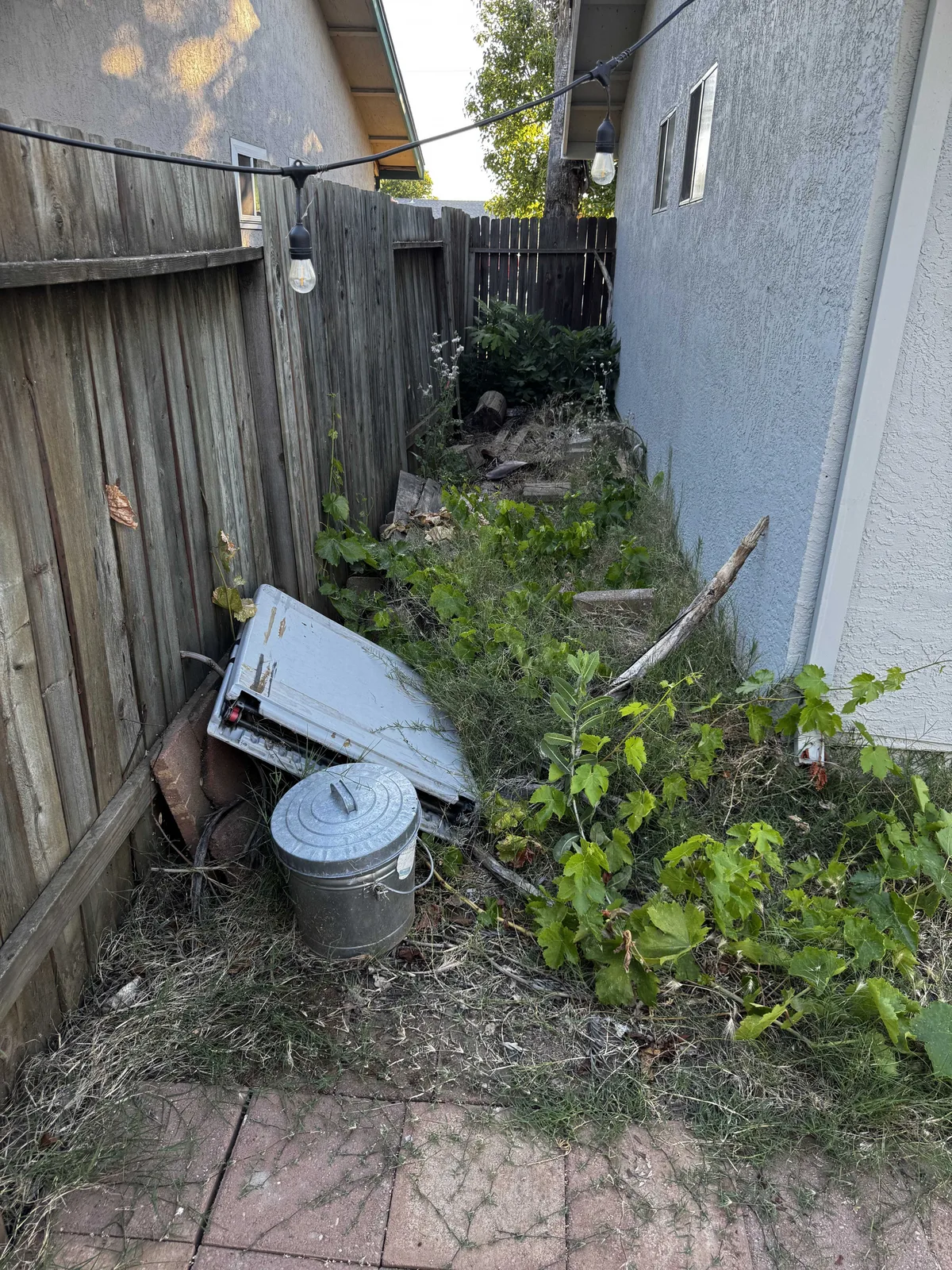
Clearing and ground prep. HomeGuide says clearing vegetation and debris can also raise the total. Angi says stumps, trees, bushes or existing pavement to remove add to the cost. An overgrown side yard needs clearing before any forms go in.
Thickness. A 6 inch slab runs $8 to $20 per square foot in HomeGuide’s guide. A 4 inch slab runs $6 to $15. Its FAQ says pros recommend 5 to 6 inches for heavier vehicles like RVs. It also calls for edges of 6 to 8 inches to prevent cracking.
Steel. HomeGuide says steel reinforcement adds $1 to $3 per square foot. The guide says rebar improves durability and crack resistance.
Shape. Angi says curved edges and complex layouts take more time and formwork than simple squares or rectangles. A straight strip or a square pad is the simplest shape to form.
Access. Side yards behind a fence can be hard to reach with a concrete truck. When the truck cannot get close to the forms, the concrete has to be pumped or wheeled in. That adds labor.
Work at the street. Widening the curb cut brings city permit steps, barricades and patching. The permit section below covers what Roseville asks for.
Should the new slab tie into the old driveway?
There are two common ways to join a new slab to an old one. Steel dowels tie the new slab to the old one, or a separate joint leaves the two slabs apart. The choice changes the labor and how the slabs behave over time.
Dowels are steel bars set into holes drilled in the edge of the old slab. The new concrete is poured around them, which holds the two edges at the same height. Roseville uses this method in its own right of way. Its standards call for new sidewalk to be doweled and epoxied to the existing concrete.
A separate joint skips the drilling, so it takes less labor. Without dowels, though, the two edges can settle at different rates and leave a lip. Ask each bidder which method they plan and why. Also ask how they will match the height and slope of the old driveway.
Color is the hardest part to match. The US EPA notes that concrete darkens over time from a build-up of tire residue, dirt and oil. A fresh pour next to an older slab will look lighter at first. Ask how the bidder will match the finish, and expect some color difference.
The old driveway needs to be sound before you add to it. Adding new concrete does not fix a cracked or settled slab beside it. If yours is in rough shape, read up on concrete repair and resurfacing to weigh repair against replacement.
Drainage near the house matters too. Section R401.3 of the 2025 California Residential Code covers it. Impervious surfaces within 10 feet of the foundation must slope at least 2 percent away from the building. That is about a quarter inch of fall per foot. A side extension that runs along the house can fall inside that band.
Do you need a permit to widen a driveway in Roseville?
The part on your lot may not need a building permit. Work at the street does need a city permit.
Roseville’s Permit Exemptions handout comes from the Building Inspection Division and is dated January 28, 2025. It lists sidewalks and driveways not more than 30 inches above adjacent grade. They also cannot sit over a basement or story below, or be part of an accessible route.
The street side works differently. Roseville Engineering says an encroachment permit is required for improvements or staging construction within the public right of way. The curb, gutter and driveway approach sit there, so a wider approach or a new curb cut needs that permit.
The city’s requirements sheet for minor sidewalk and driveway permits lists standards like these:
- The Public Works Inspector gets 48 hours notice before work starts.
- Underground Service Alert gets a call 48 hours before any concrete is removed.
- Type 2 barricades with flashing lights go up when concrete or asphalt comes out.
- Subgrade for driveways is processed to 95 percent relative compaction.
- All concrete is Class A, six sack.
- The asphalt patch at the gutter lip is at least two feet wide and six inches deep.
Each of those steps is labor and material that a curb cut adds to the job. Roseville’s engineering page says permit fees are determined at review, from its fee table. Staff may also require a permit security, based on the total cost of the improvements.
Get it in writing which permits the job needs and who applies for them. That keeps the permit work inside the quote you compare.
How much of your front yard can you pave in Roseville?
Roseville limits how much of the front setback can be paved for parking. The city’s parking fact sheet puts it this way:
“A maximum of 50% of the required front and street side yard setback area may be improved to allow parking of vehicles, boats, recreational vehicles, campers, and trailers.”
The sheet says the city’s Planning Division can give you the dimensions of your front and side setback area. It can also tell you how much of that area may be paved. Measure what is paved now before you plan a wide extension, since a two-car pad can use up that allowance.
The same sheet makes it unlawful to park on unimproved surfaces, such as a front lawn. It also bars large commercial vehicles of 10,000 lbs. or more gross vehicle weight from parking on residential property.
If your home is in an HOA, read its covenants, conditions and restrictions before you plan a front yard change. Check what the approval process asks for, and build that time into your schedule.
What if you live in Rocklin or a nearby city?
Rocklin runs its own encroachment permit. Its permit page says anyone working in the city right of way needs one, residents included. The same rule covers city-owned land and city easements.
The application needs two copies of plans showing the work, plus the permit fee from the city’s requirements list. Rocklin also says to call Underground Service Alert before any excavation. The call must come no sooner than fourteen days and no later than two days before digging starts.
Rocklin is clear that the call is not just for professionals. Anyone performing work in the public right of way must call. Other cities near Roseville run their own permits. Check with the city that maintains your street before anyone cuts the curb.
Planning an extension with the rest of the yard
A driveway extension often comes up during a bigger yard project. On a new-construction lot, the side yard may still be bare dirt. Angi lists a flat yard with sod or bare dirt as the least expensive site to work with.
We plan a whole yard in order. Grade and drainage come first, then underground irrigation and conduit. Concrete and walls come next, then turf, sod, rock and planting. Lines that cross under the new slab go in before the pour.
A pad set apart from the driveway, say for a shed or hot tub, is a standalone concrete slab job. It follows its own sizing and base needs.
RMR Construction is a licensed California contractor, CSLB #1088628. Estimates are free, and the quote comes in writing after an on-site walk-through. See how we build concrete driveways, or request a free estimate.